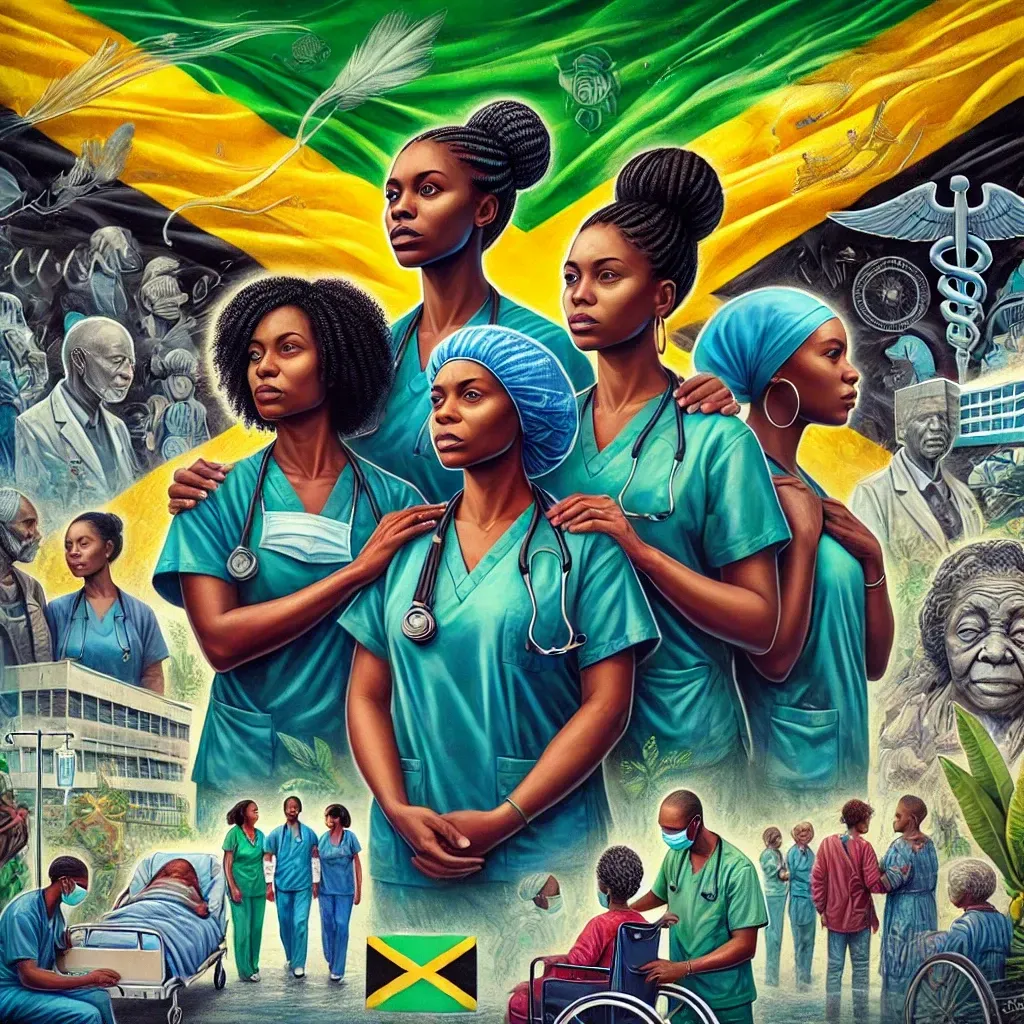
Ghetto Life in Kingston, Jamaica: Struggles, Survival, and Hope | A Powerful Memoir by Patricia N. McKenzie


Patricia McKenzie honors the unsung heroes—mothers, fathers, students, vendors, and dreamers—who rise above adversity. She paints vivid portraits of community unity, cultural pride, and the pursuit of education against all odds. At once a memoir, a social commentary, and a call to action, this book reminds us: where you come from does not define where you can go.  
This book is a powerful and deeply personal reflection on the resilience of a forgotten community, Ghetto Life chronicles the daily battles, survival strategies, and enduring spirit of those living in Kingston’s urban ghettos. From pothole-filled streets to homes lit only by streetlamps, this gripping narrative explores poverty, discrimination, and the overlooked brilliance of people striving for a better life.

A Nurse’s Perspective on Poverty and Health Inequality

What sets this memoir apart is McKenzie’s professional lens as a registered nurse. She connects the dots between systemic inequality and health disparities.

Poverty impacts:

  • Maternal health
  • Childhood development
  • Mental health outcomes
  • Nutrition and chronic illness
  • Access to preventative care

Her insight reveals that inequality is not abstract — it manifests in hospital rooms, emergency calls, and silent suffering.

This intersection of healthcare and social justice adds depth and authority to her storytelling.


Community Strength: The Heart of Kingston’s Inner City

Despite hardship, Kingston’s ghetto communities are not defined by despair.

McKenzie honors:

  • Mothers who stretch limited resources to feed their children
  • Fathers working multiple jobs to create stability
  • Students determined to rise through education
  • Vendors and entrepreneurs building micro-economies
  • Neighbors who protect and uplift one another
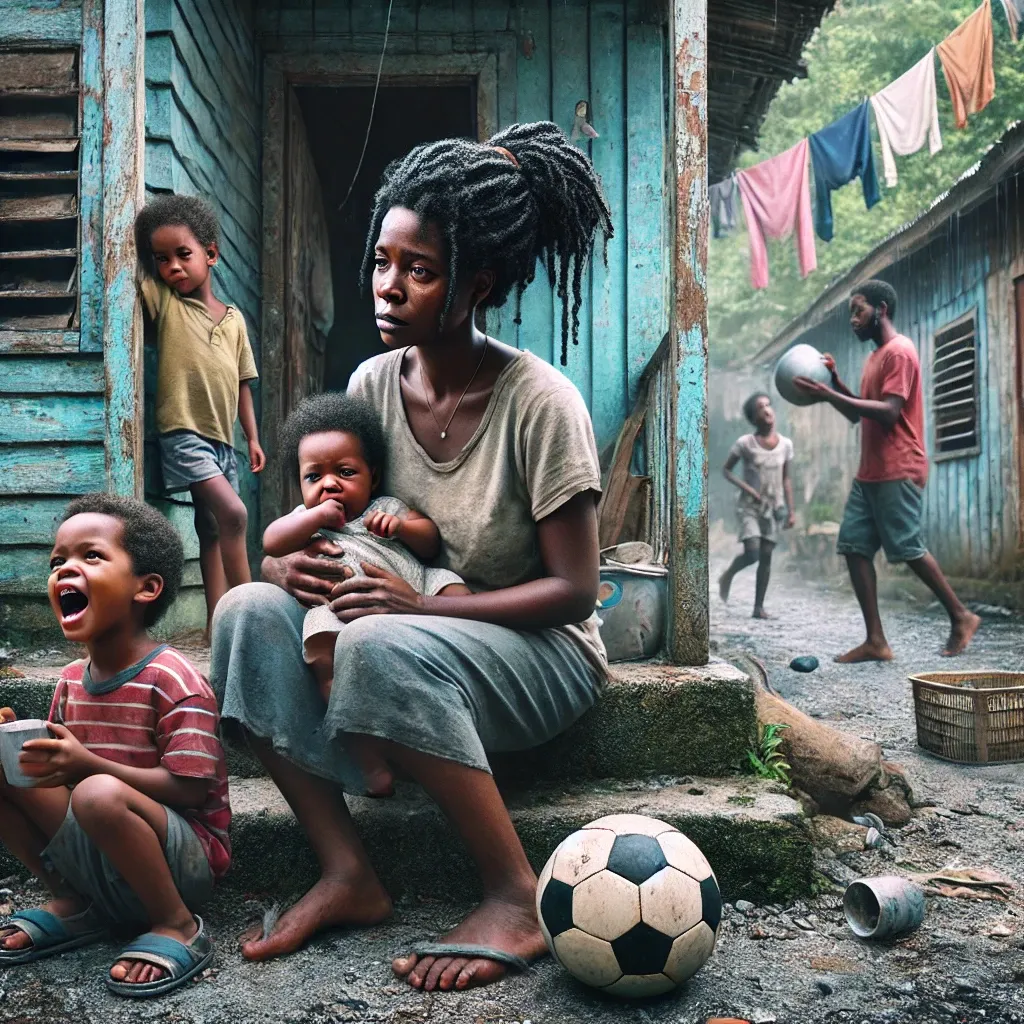
Hope is not naïve optimism — it is daily resistance.

The memoir paints vivid scenes of cultural pride, unity, and resilience that challenge one-dimensional stereotypes about “ghetto life.”


Why This Book Matters Now

In an era of global conversations about systemic inequality and economic disparity, Ghetto Life arrives as both documentation and call to action.

Readers seeking authentic voices from marginalized communities will find depth here. It contributes to broader discussions around:

  • Structural poverty
  • Healthcare inequity
  • Urban neglect
  • Education access
  • Community-driven empowerment

The memoir urges readers not only to witness but to reflect.


Who Should Read Ghetto Life?

This book is ideal for:

  • Readers of powerful memoirs
  • Social justice advocates
  • Caribbean diaspora communities
  • Students of sociology and public health
  • Book clubs seeking meaningful discussion
  • Anyone who believes in resilience and hope

Its emotional depth makes it both educational and transformative.

Frequently Asked Questions

What is Ghetto Life: Struggles, Survival, and Hope in Kingston, Jamaica about?

It is a memoir by Patricia N. McKenzie, RN, detailing real-life experiences growing up and working in Kingston’s inner-city communities, highlighting poverty, resilience, and systemic inequality.

Is this book based on a true story?

Yes. The memoir draws from the author’s lived experiences and professional observations as a registered nurse in Jamaica.

Who would enjoy reading this book?

Readers interested in social justice, Caribbean culture, urban survival stories, and memoirs similar to Angela's Ashes and Born a Crime.

Does the book focus only on hardship?

No. While it addresses poverty and violence, it strongly emphasizes hope, resilience, cultural pride, and community strength.

What makes this memoir unique?

The author’s dual perspective as both a community member and healthcare professional provides rare insight into the health and human impact of systemic inequality.

Perfect for readers of social justice, memoir, Caribbean life, and those who believe in the power of hope.

Ghetto Life
is a deeply personal and unflinching memoir revealing the struggles and strength of Kingston’s inner-city communities. Written by Patricia N. McKenzie, RN, it is a powerful story of poverty, survival, resilience, and hope that will challenge perspectives and inspire change. 
Because stories like this deserve to be read. 
And communities like this deserve to be seen.
  • Get Your Copy Today
  • Read the Story the World Needs
  • Experience the Journey
  • Start Reading Now
  • Own This Powerful Memoir

SCAN QR CODE HERE: 👉

 in paperback and digital formats.

👉 Buy now and experience the powerful story readers are calling unforgettable.

👇

https://www.amazon.com/Ghetto-Life-Struggles-Survival-Kingston/dp/B0F2N697K6/


ABOUT THE AUTHOR: 

Nurse. Author. Storyteller. Advocate for Healthy Families.

Patricia N. McKenzie, RN is a registered nurse, caregiver, and passionate storyteller who combines her healthcare experience with a love of writing to promote healthy families and positive values. With over eighteen years of experience in a Step-Down Cardiac Unit, Patricia uses both education and storytelling to inspire compassion, resilience, and wellness in children and adults alike.


BLACK HISTORY FEATURE: Old House and Red Neckties ---A Powerful Memoir of Identity, Migration, and Resilience

by Grace Virtue (Author)

Paperback – July 25, 2024

5.0 out of 5 stars (28 reviews)


“Enlightening, poetically engaging, and deeply relevant to today's America, and for our world.” — Kirandeep Singh Sirah, Storyteller & TEDx Speaker


“A modern-day Jamaican DeTocqueville, Grace critiques political and civil society and helps us see them in revealing new ways.” — Matthew Creelman, Journalist


“A timely work that addresses the ways the construction of race goes beyond the Black-White dichotomies, particularly in the United States.” — Curdella Forbes, PhD, Professor of Caribbean Literature, Howard University


About the Book

In Old House and Red Neckties, Grace Virtue delivers a compelling and deeply reflective narrative that bridges Jamaica and the United States, past and present, home and displacement.

Rooted in her homeland of Jamaica, Virtue explores:

  • The lasting legacies of slavery and colonialism
  • Intergenerational poverty and systemic inequities
  • Migration as both opportunity and upheaval
  • The emotional and cultural costs of displacement

The “Old House” symbolizes heritage, identity, and belonging. The “Red Necktie” becomes a powerful metaphor for assimilation, power structures, and the complex realities of migration to America.

Through vivid storytelling and sharp social insight, Virtue confronts the construction of race beyond simplistic Black–White dichotomies and challenges readers to rethink how poverty and oppression are understood in contemporary society.


Why This Book Matters in 2024

In a time of intense conversations around race, immigration, and social justice, Old House and Red Neckties stands out as:

  • thought-provoking Caribbean memoir
  • An immigration and diaspora narrative
  • social justice commentary
  • An inspirational story of resilience and dignity
  • A meaningful contribution to discussions about race in America

Grace Virtue’s journey is both deeply personal and globally relevant — a clarion call to authenticity, courage, and freedom.


Perfect For Readers Interested In:

  • Caribbean and postcolonial literature
  • Books about race and identity in America
  • Stories of migration and cultural displacement
  • Social justice and systemic inequality
  • Inspirational memoirs by women of color


Old House and Red Neckties (Paperback, July 25, 2024) is more than a memoir — it is a lens through which we can examine belonging, power, and the enduring human spirit.

If you are searching for a meaningful, socially relevant book that combines lyrical storytelling with sharp cultural critique, this 5-star memoir deserves a place on your reading list.

🇯🇲 Jamaican Street Talk: Will Reggae Boyz Dance Again Into World Cup History?


🇯🇲 Jamaican Street Talk: Will the Reggae Boyz Dance Into World Cup History?

 – As the Reggae Boyz prepare for a high-stakes FIFA World Cup Inter-Continental Play-off in March, the nation finds itself at a familiar crossroads. While the dream of returning to the global stage remains alive, the journey has been marked by recent coaching upheavals and a stark contrast to the historic 1998 campaign.
The 1998 Blueprint: Grit Over Glamour
Jamaica's lone World Cup qualification in 1998 was built on an "unlikely journey" that captured the world's imagination. Under Brazilian coach René Simões, a largely amateur squad utilized a "blueprint of hunger" to overcome regional giants.
  • Tactical Resilience: In 1998, Jamaica turned the National Stadium into a "fortress," famously securing a 0-0 draw against Mexico to punch their ticket to France.
  • Crowd Energy: Matches in '98 saw attendance figures frequently exceeding the stadium's 30,000 capacity, creating a "sea of gold" that has been difficult to replicate in the modern era.
  • Unity: Despite internal cultural differences between homegrown and British-based players, the '98 squad was praised for a "fire and pride" that bonded the team as a cohesive unit.
Modern Challenges: Talent Without Cohesion
Today’s Reggae Boyz boast a squad arguably more talented than their '98 predecessors, featuring elite professionals like Leon Bailey and Michail Antonio. However, the team has struggled with consistency and administrative stability.
  • Coaching Turmoil: Following a failure to secure automatic qualification in November 2025—losing out to Curaçao—head coach Steve McClaren resigned after just 18 months. Interim coach Rudolph Speid now leads a side looking to "reorganize" for the March playoffs.
  • Infrastructure & Governance: Unlike the 1998 program, which was a national priority, current critics point to a "governance breakdown" at the Jamaica Football Federation (JFF), citing issues with player bonuses, professional arrangements, and a lack of long-term development pathways.
  • Defensive & Midfield Gaps: While the 1998 team was renowned for being hard to score against, the current side has faced criticism for losing tactical shape and failing to control crucial midfield battlegrounds in high-pressure matches.
The Road to 2026: A Second Chance
Despite missing out on the automatic spots, Jamaica remains "within striking distance" via the FIFA Play-off Tournament. The path to history is clear:
  1. March 26: Semi-final vs New Caledonia in Guadalajara.
  2. March 31: Potential Final vs Congo DR for a spot in Group K.
While "vibes" and talent have carried them this far, experts agree that Jamaica must rediscover the defensive discipline of 1998 to finally dance back onto the world stage.
Should Jamaica prioritize local talent development over diaspora recruitment to ensure long-term stability?